







★★★★★
Exceeded my expectations in every way! They were extremely prompt, incredibly friendly, and remarkably affordable.

IRS FORM 8283 QUALIFIED APPRAISALS
Charitable donation appraisal services for IRS Form 8283 filings and non-cash tax deductions, prepared in accordance with USPAP. Legacy Donation Appraisers values personal property, fine art, equipment, vehicles, and business interests nationwide.










CREDENTIALS
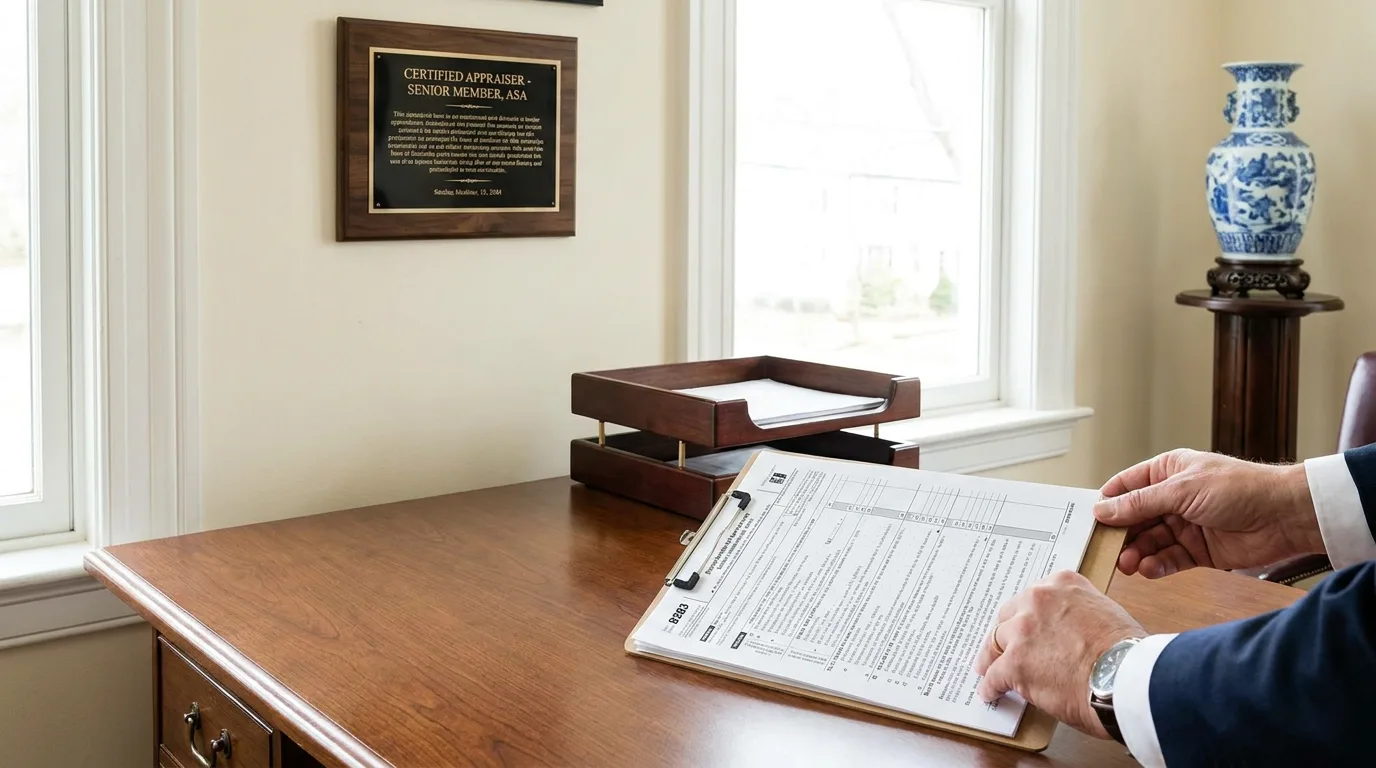
Legacy Donation Appraisers assignments are completed by credentialed appraisers holding respected designations such as ISA, ASA, and AAA, with subject-matter expertise across fine art, tangible personal property, business interests, equipment, and more.
ISA

ASA

AAA
Legacy Donation Appraisers provides IRS-qualified appraisals across all major asset categories for charitable tax deductions, including:
Appraisals of furniture, jewelry, watches, collectibles, antiques, luxury goods, clothing, decorative arts, and household inventory.
Appraisals of paintings, prints, sculpture, photography, and mixed media by Old Master, Impressionist, Modern, Post-War, and Contemporary artists.
Appraisals of manufacturing equipment, construction machinery, restaurant equipment, medical devices, agricultural equipment, and specialized tools.
Appraisals of privately held business interests, including S Corps, C Corps, LLCs, ESOP-owned companies, and partnership interests.
Appraisals of retail and wholesale inventory, including food inventory, clothing and apparel inventory, raw materials, and finished goods.
Appraisals of gold, silver, platinum, bullion bars, investment-grade coins, and precious metal holdings.
Appraisals of cars, trucks, SUVs, classic vehicles, boats, RVs, motorcycles, and specialty vehicles.
Appraisals of digital assets including Bitcoin, Ethereum, stablecoins, NFTs, and other blockchain-based holdings.
A qualified appraisal is a formal valuation report that meets specific IRS requirements under Treasury Regulation Section 1.170A-17. When you claim a deduction of more than $5,000 for non-cash charitable contributions, the IRS requires a qualified appraisal prepared by a qualified appraiser to substantiate the claimed fair market value.
The appraisal must be prepared in accordance with the Uniform Standards of Professional Appraisal Practice (USPAP) and include detailed information about the property, valuation methodology, and the appraiser's credentials. For donations exceeding $5,000, you must complete Section B of IRS Form 8283 and have your appraiser complete and sign Part IV (Appraiser Declaration).

IRS REQUIREMENTS
Holds recognized appraisal credentials or demonstrates the required education and experience for the asset type.
Prepares appraisals for compensation on a regular basis as part of an ongoing practice.
Shows verifiable competency in valuing the specific property type being appraised.
Is not the donor, the donee, or a party related to either.
Does not charge a fee based on a percentage of the appraised value.
Supplies their taxpayer identification number as part of the appraiser declaration.
APPRAISAL TIMELINE
Plan ahead: if your donation happens outside the 60-day window from the appraisal date, the report may need to be updated to reflect the correct valuation effective date.
The appraisal must be performed no earlier than 60 days before the date of contribution.
The effective date of valuation must be the date of the charitable contribution, not the date of the report.
The appraisal must be completed no later than the due date, including extensions, of the tax return on which the deduction is first claimed.
HOW IT WORKS
We review your documentation and scope the assignment before any work begins.
Our appraiser researches comparable sales and market data specific to your asset.
Most assignments are completed from photos and documentation; on-site inspection is arranged when the asset calls for it.
We draft a written appraisal report stating fair market value and the methodology used to reach it.
Our appraiser signs Part IV, the Appraiser Declaration, and you receive all documentation ready for your tax filing.
PRICING
Different asset categories require different levels of expertise and research.
Multiple items or full collections may require additional time and documentation.
Section B reporting, artwork valued over $20,000, and other specifics affect the fee.
Complex or illiquid assets may require additional market analysis and documentation.
CLIENT VOICES
Exceeded my expectations in every way! They were extremely prompt, incredibly friendly, and remarkably affordable.
Very helpful and professional! I have searched for appraisers before and it's been hard to find someone who can manage complex projects. The items I donated covered many SKUs and Joe has managed to help me value them quickly and accurately! The team provided me with all necessary documents so I could submit with my tax return. Very pleasant experience with him and highly recommend!
I'd have given them 10 stars if it were possible. They were quick to reply, incredibly helpful, knowledgeable, professional and managed to make it fairly simple. I highly recommend them!
The best company I was lucky to find by accident. Their customer service is OUTSTANDING and a welcome surprise in today's world where good customer service is an anomaly! They returned an appraisal in a timely manner, it was clear, concise, cost-effective and exactly what I needed. My CPA is also thrilled to have them as an accredited appraisal service he can use for other clients. I rarely leave reviews, but I could not pass giving them 5 stars and I'd give 10 if possible!
We were very satisfied with the results - fast and efficient communication, understanding our company's needs, on-time delivery of the report, as well as reasonable price point. Highly recommend.
Professional & responsive. The report was quite thorough as well.
WHERE WE WORK
We provide on-site and remote appraisal services across the following locations.
From Our Blog
Guides on IRS Form 8283, donation deduction rules, art and ticket donations, and the appraisal penalties to avoid.

The charitable contribution written acknowledgment requirement and the qualified appraisal requirement are separate IRS rules that prove different things, and for many noncash gifts over $5,000, you need both. This guide breaks down what each document actually substantiates.
Read more →
Insurance value, replacement cost, and fair market value can produce three very different numbers for the same donated item, and only one of them supports an IRS charitable deduction. This guide walks through a worked example so you know which figure actually belongs on Form 8283.
Read more →
The IRS aggregation rule for charitable donation appraisals requires donors to add up similar items, not just single pieces, when checking the $5,000 qualified-appraisal threshold. This guide explains when a collection should be valued as one lot versus item-by-item, and how to avoid an invalid Form 8283.
Read more →
IRS-qualified appraisal services follow a specific set of rules under IRC Section 170(f)(11): the right appraiser, the right timing, and a report that meets USPAP and Form 8283 standards. Here's exactly what those rules require and how a compliant appraisal is built.
Read more →
The comparable sales method drives most charitable donation appraisals, but a comp only counts if it's recent enough and similar enough to your item. This guide explains the IRS weighting factors, the 60-day appraisal window, and how to spot a comparable sale that won't hold up under review.
Read more →
The related-use rule caps your charitable deduction at cost basis, not fair market value, whenever a charity sells your donated item instead of using it in its mission. This guide walks through the IRS test, the three-year recapture rule, and worked examples for art, collectibles, and equipment donations.
Read more →
Donating unexpired prescription medication to SIRUM can qualify as a charitable contribution, but claims over $5,000 generally require a qualified appraisal and IRS Form 8283 Section B. This guide explains how fair market value is determined for pharmaceutical inventory and how the rules differ for individual and corporate donors.
Read more →
Donating clothing or an apparel inventory lot triggers different IRS rules depending on condition and value. This guide walks through the $500 and $5,000 thresholds, the three fair market value methods in IRS Publication 561, and why bulk apparel lots need a category-based appraisal instead of item-by-item pricing.
Read more →
A gold and silver coin appraisal for donation is legally required once your claimed deduction passes $5,000, and the IRS treats a coin collection as one aggregated item. Here's how coin value gets determined, what documentation to gather, and what a compliant appraisal report includes.
Read more →
A timeshare appraisal for donation must meet the same IRS qualified appraisal and fair market value standards as any other non-cash gift, and the resale market, not the original purchase price, sets that value. This guide walks through the $5,000 appraisal threshold, the FMV rules, and why so many timeshares end up worth far less than donors expect.
Read more →
Donated car tax deduction rules follow a stricter, more formulaic path than the rules for art, jewelry, or household goods. This guide explains the $500 acknowledgment threshold, Form 1098-C, the gross-proceeds limit, and the exceptions that let a donor claim fair market value instead.
Read more →
Donating a motorhome or travel trailer to charity can trigger IRS Form 8283's qualified appraisal requirement once the claimed deduction tops $5,000. This guide walks through the special "qualified vehicle" rule, what actually drives fair market value, and how the appraisal process works for this asset type.
Read more →
Not every credentialed appraiser meets the IRS bar for a charitable donation appraisal. Here is exactly what Treas. Reg. 1.170A-17 requires, who is excluded for conflicts of interest, and how to vet a candidate before you file Form 8283.
Read more →
Donating a piano or musical instrument worth more than $5,000 triggers an IRS requirement for a qualified appraisal and Form 8283 Section B reporting. This guide explains the threshold, what actually drives an instrument's value, and why a USPAP-compliant appraisal protects your deduction.
Read more →
A charitable remainder unitrust (CRUT) pays you or another beneficiary a variable income stream for life or up to 20 years, then leaves the remainder to charity. This guide explains the IRC Section 664 payout rules and exactly when funding a CRUT with property triggers a qualified appraisal and IRS Form 8283.
Read more →
Donating sports or event tickets to charity can generate a meaningful tax deduction, but the IRS requires a qualified appraisal for donations over $5,000 and strict compliance with Form 8283. This guide covers the exact thresholds, how fair market value is determined, what a compliant appraisal report must contain, and the deadlines you cannot miss.
Read more →
Intuit has retired ItsDeductible, leaving donors without their go-to tool for valuing non-cash charitable contributions. This guide covers the best alternatives, from dedicated tracking apps like Deductible Duck, DeductAble, and ItsDeducted to free charity guides and IRS-required qualified appraisals, so you can protect every deduction you claim.
Read more →
IRS promoter penalties for charitable donations can fall on appraisers, not just promoters, under IRC sections 6700, 6701, and 6695A. This guide breaks down how each penalty is triggered, how the math works, and what separates a defensible appraisal from a costly one.
Read more →
The IRS has placed art donation deductions on its 2026 Dirty Dozen list, signaling aggressive enforcement against inflated valuations and promoter-driven schemes. This guide covers the exact thresholds, appraisal requirements, penalty exposure, and what to do if you have a past or planned art donation.
Read more →
A practical guide to understanding when a qualified appraisal is legally required — and how to protect your deduction
Read more →See all frequently asked questions here.
A qualified appraisal is required when you claim a deduction of more than $5,000 for non-cash property other than certain publicly traded securities. For donations under $5,000, you may not need a formal appraisal but should still maintain documentation supporting your claimed value. The appraisal must be prepared by a qualified appraiser and meet IRS requirements under Treasury Regulation Section 1.170A-17.
A qualified appraisal must meet specific IRS requirements: be prepared in accordance with USPAP standards, completed by a qualified appraiser, include a detailed property description and condition, state the valuation effective date, explain the valuation methodology, provide the appraiser's credentials and competency declaration, state the fair market value as defined under IRS regulations, and be prepared for income tax purposes. The appraisal must also be performed within 60 days before the donation date.
Cost varies based on asset type, number of items, complexity, and reporting requirements. Factors include asset category and valuation complexity, number of items being appraised, Section B reporting requirements, need for additional documentation such as artwork valued at $20,000 or more, and business or illiquid asset analysis. We provide transparent fixed-fee quotes prior to engagement so clients understand costs upfront.
The appraisal must be performed no earlier than 60 days before the date of contribution and no later than the due date including extensions of the tax return on which the deduction is first claimed. If the donation occurs outside the 60-day window from the appraisal date, the report may need to be updated to reflect the correct valuation effective date.
Under IRS regulations, a qualified appraiser must hold recognized appraisal credentials or meet required education and experience standards, regularly prepare appraisals for compensation, demonstrate competency in valuing the specific property type, provide their taxpayer identification number, not be the donor, donee, or a related party, and not charge a fee based on a percentage of the appraised value.
IRS Form 8283, Noncash Charitable Contributions, is used to report non-cash donations exceeding $500. When the claimed deduction exceeds $5,000, Section B must be completed and supported by a qualified appraisal. The form documents the property description, acquisition and donation dates, manner of acquisition, fair market value, donee acknowledgment, and qualified appraiser declaration.
We prepare qualified appraisals for a wide range of donated assets including personal property, fine art, machinery and equipment, business interests, inventory, bullion and precious metals, vehicles, and cryptocurrency. Each asset type requires specialized expertise and market knowledge to determine accurate fair market value.
Yes, we offer expedited appraisal services to help donors and advisors meet IRS filing deadlines, including support for Form 8283 Section B. Rush availability depends on asset type, complexity, and documentation readiness, so early coordination is recommended.
Get started with your IRS-qualified charitable donation appraisal